Zapraszam na kolejny odcinek z serii wpisów na temat struktur danych. Dzisiaj uzupełnimy naszą wiedzę o pojęcie jakim jest lista dwukierunkowa, a więc poszerzymy koncept z poprzedniego wpisu.
Zanim zaczniemy, polecam zapoznać się z zagadnieniem listy jednokierunkowej. Program z dzisiejszego wpisu będzie szybką adaptacją tamtego , a więc oszczędzę Ci przydługich wywodów.

Nie daj się zaskoczyć na maturze - zapisz się do listy mailingowej już teraz!
Lista dwukierunkowa, a jednokierunkowa - zasadnicza różnica
Nie trzeba być Teslą, żeby domyślić się, że różnica pomiędzy listą dwu- a jednokierunkową polegać będzie na sposobie przemieszczania się po strukturze. W prostszej wersji listy poruszamy się tylko w jednym kierunku. Od początku do końca. Od głowy do ogona. Lista dwukierunkowa umożliwia zmianę azymutu na odwrotny, tzn. teraz możemy przechodzić po elementach od tyłu i cofać się w obrębie listy. Znika więc ograniczenie, które pojawiało się przy pierwszej z list. Mianowicie, gdy chcemy dostać się do np. przedostatniego elementu to nie musimy zaczynać przechodząc od początku listy. Możemy zacząć od jej końca, co pozwoli oszczędzić wiele kroków.
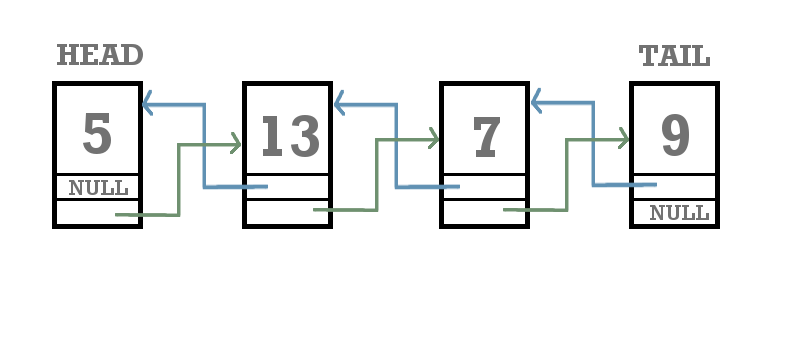
Jak widać każdy węzeł ma teraz więcej niż jeden wskaźnik. Teraz wskazuje nie tylko na następny element, ale również na poprzedni.
Lista dwukierunkowa – implementacja w C
Tak jak wspominałem w poprzednim wpisie – struktury zaimplementowane będą w C. Dzisiejszy program będzie pełnymi garściami czerpał z poprzedniego, więc ten wpis będzie mniej obszerny. Nie będę opisywać krok po kroku każdej funkcji.
Struktura listy dwukierunkowej C
typedef struct ListElement {
    int data;
    struct ListElement * previous;
    struct ListElement * next;
} ListElement_type;
Jedyne co trzeba mieć na uwadze to występowanie wskaźnika na poprzedni węzeł w strukturze. Co to zmienia? Przy każdej zmianie musimy edytować wskaźniki sąsiednich węzłów tak, aby nie pogubić wskaźników – nie rozerwać tego łańcuszka, który tworzą.
Poruszanie się po liście od tyłu
Tak jak wspomniałem od teraz mamy możliwość poruszania się po liście w odwrotnym kierunku. Skorzystamy, więc z niej, aby wyświetlić listę od tyłu.
Funkcja show_reverse() będzie wykorzystywać ten sam motyw z pętlą while co funkcja show(). Tylko, że zamiast korzystać ze wskaźnika next, skorzystam ze wskaźnika na element poprzedni – previous.
void show_reverse(ListElement_type *head)
{
    printf("\n");
    if(head==NULL) printf("List is empty");
    else
    {
        ListElement_type *current=head;
        while (current->next != NULL) {
            current = current->next; //idziemy na koniec listy
        }
    do {
    	printf("%i", current->data);
        printf("\n");
        current = current->previous;
	}while(current!=NULL);

}
}
Dobrym pomysłem byłoby podawanie jako parametr funkcji ogona listy, a nie głowy. Nie byłoby wtedy potrzeby wtórnego przechodzenia po liście od jej początku. W tym celu można, by było wykorzystać np. dodatkowy wskaźnik tail, który wskazywałby na aktualny koniec listy.
Podsumowanie
Jak widać struktury nie są wcale zagadnieniem skomplikowanym. Powiedziałbym nawet, że są dość intuicyjne.
//Łukasz Kosiński - implementacja listy jednokierunkowej #include <stdio.h> #include <stdlib.h> #include <conio.h> #include <windows.h>typedef struct ListElement { int data; struct ListElement * previous; struct ListElement * next; } ListElement_type;
void show(ListElement_type *head); void show_reverse(ListElement_type *head); int list_size(ListElement_type *head); void push_front(ListElement_type **head, int number); void push_back(ListElement_type **head, int number); void push_by_index(ListElement_type **head, int number, int position); void pop_front(ListElement_type **head); void pop_back(ListElement_type **head); void pop_by_index(ListElement_type **head, int position);
int main() { ListElement_type *head; head = (ListElement_type *)malloc(sizeof(ListElement_type)); head=NULL;
int option=-1; int number=-1; int index=-1; while(option!=0) { system("cls"); printf("\nAktualny stan listy: "); show(head); printf("\n\nDrogi uzytkowniku! Co chcesz zrobic?\n"); printf("1. Dodac element na poczatek listy.\n"); printf("2. Dodac element na koniec listy.\n"); printf("3. Dodac element zgodnie z wybranym indeksem.\n"); printf("4. Usunac element z poczatku listy.\n"); printf("5. Usunac element z konca listy.\n"); printf("6. Usunac element o wybranym indeksie.\n"); printf("7. Wyswietlic liste w odwrotnej kolejnosci.\n"); printf("0. Zakonczyc program.\n"); scanf("%i", &option); switch (option) { case 0: return 0; break; case 1: printf("Wpisz liczbe jaka chcesz dodac: "); scanf("%i", &number); push_front(&head, number); break; case 2: printf("Wpisz liczbe jaka chcesz dodac: "); scanf("%i", &number); push_back(&head, number); break; case 3: printf("Wpisz liczbe jaka chcesz dodac: "); scanf("%i", &number); printf("Wpisz indeks: "); scanf("%i", &index); push_by_index(&head, number, index); break; case 4: pop_front(&head); break; case 5: pop_back(&head); break; case 6: printf("Wpisz indeks elementu, ktorego chcesz sie pozbyc raz na zawsze: "); scanf("%i", &index); pop_by_index(&head, index); break; case 7: show_reverse(head); Sleep(4000); break; default: printf("Podaj wlasciwa opcje."); Sleep(2000); break; } } return 0;}
void push_front(ListElement_type **head, int number) {
if(*head==NULL) { *head = (ListElement_type *)malloc(sizeof(ListElement_type)); (*head)->data = number; (*head)->previous=NULL; (*head)->next = NULL; } else { ListElement_type *current; current=(ListElement_type *)malloc(sizeof(ListElement_type)); current->data=number; current->previous=NULL; current->next=(*head); (*head)->previous=current; *head=current; }}
void push_back(ListElement_type **head, int number) {
if(*head==NULL) { *head = (ListElement_type *)malloc(sizeof(ListElement_type)); (*head)->data = number; (*head)->previous = NULL; (*head)->next = NULL; }else { ListElement_type *current=*head; ListElement_type *new_element; while (current->next != NULL) { current = current->next; } current->next = (ListElement_type *)malloc(sizeof(ListElement_type)); current->next->data = number; current->next->previous=current; current->next->next = NULL; }}
void push_by_index(ListElement_type **head, int number, int position) { if(position==0) push_front(head, number); else { if(position==list_size(*head)) push_back(head, number); else { ListElement_type *current=*head; ListElement_type *tmp;
int i=0; while (current->next != NULL && i<position-1) { current = current->next; i++; } tmp=current->next; current->next=(ListElement_type *)malloc(sizeof(ListElement_type)); current->next->data=number; current->next->previous=current; tmp->previous=current->next; current->next->next=tmp; } }}
void pop_front(ListElement_type **head) {
if (*head!=NULL) { if((*head)->next==NULL) { *head=NULL; } else { ListElement_type *tmp; tmp=(*head)->next; free(*head); *head=tmp; (*head)->previous=NULL; } }}
void pop_back(ListElement_type **head) {
if((*head)->next==NULL) { *head=NULL; }else { ListElement_type *current=*head; while (current->next->next!= NULL) { current = current->next; } free(current->next); current->next=NULL; }}
void pop_by_index(ListElement_type **head, int position) { if(position==0) pop_front(head); else { ListElement_type *current=*head; ListElement_type *tmp;
int i=0; while (current->next != NULL && i<position-1) { current=current->next; i++; } tmp = current->next; current->next = tmp->next; current->next->previous=current; free(tmp); }}
void show(ListElement_type *head) { printf(“\n”); if(head==NULL) printf(“List is empty”); else { ListElement_type *current=head; do { printf(“%i”, current->data); printf(“\n”); current = current->next; }while (current != NULL); } }
void show_reverse(ListElement_type *head) { printf(“\n”); if(head==NULL) printf(“List is empty”); else { ListElement_type *current=head; while (current->next != NULL) { current = current->next; //idziemy na koniec listy }
do { printf("%i", current->data); printf("\n"); current = current->previous; }while(current!=NULL); }}
int list_size(ListElement_type *head) { int counter=0; if(head==NULL) return counter; else { ListElement_type *current=head; do { counter++; current = current->next; }while (current != NULL); } return counter; }
O innych strukturach danych, a także o algorytmach i technikach informatycznych przeczytasz w tej książce: